
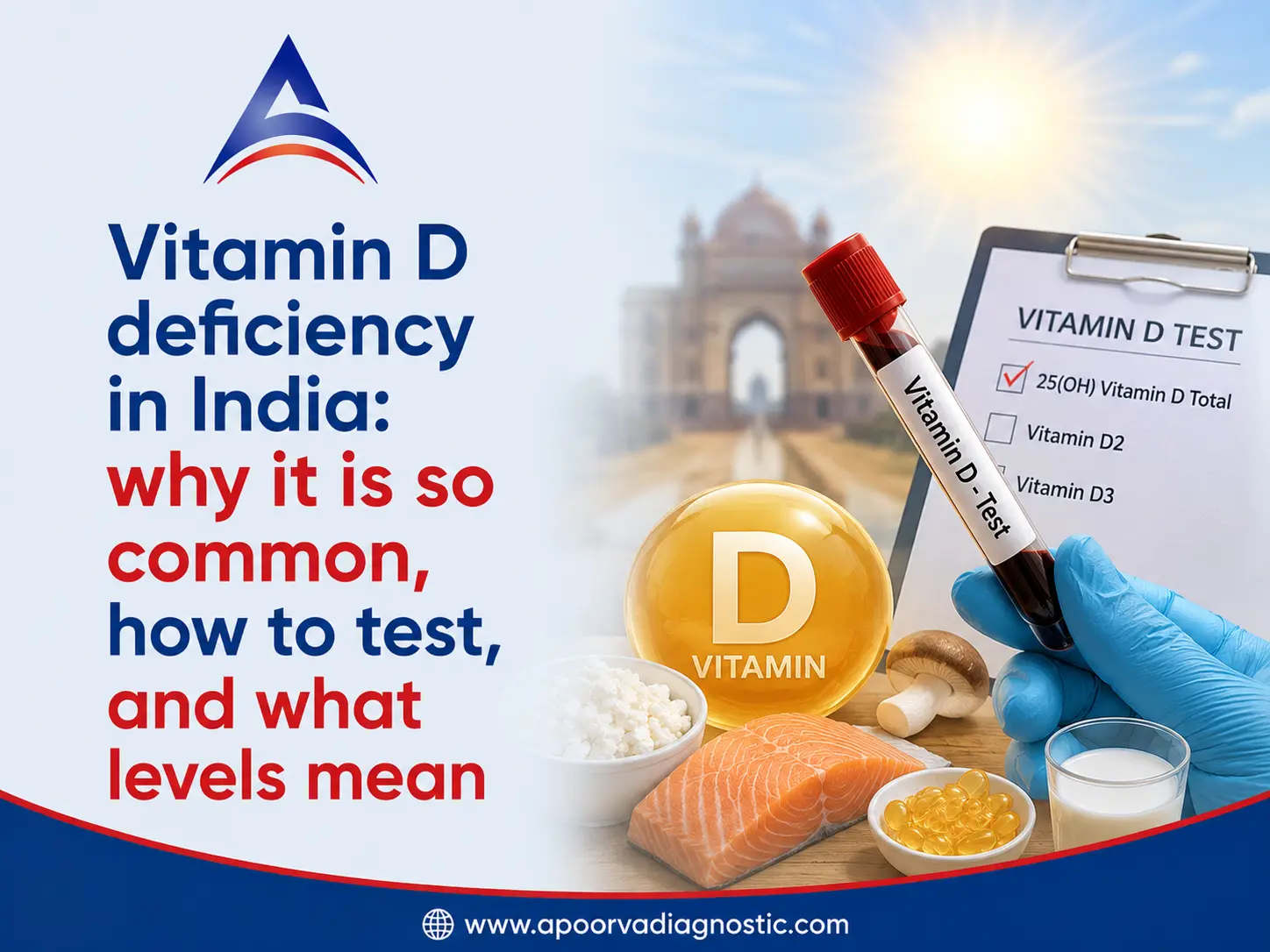
Vitamin D deficiency in India has become a surprisingly common health concern despite the country’s abundant sunshine. Many people assume that living in a sunny climate automatically provides enough Vitamin D, but studies and clinical observations show that deficiency remains widespread across different age groups.
Vitamin D plays an essential role in maintaining strong bones, supporting the immune system, improving muscle function, and contributing to overall health. When levels become too low, a person may experience symptoms that affect daily life and long-term well-being.
Understanding Vitamin D deficiency in India, its causes, symptoms, testing methods, and interpretation of results can help individuals take proactive steps toward better health. At Apoorva Diagnostic Centre, we provide reliable Vitamin D testing through our advanced pathology test centre in Indore to help patients identify deficiencies early.
Understanding Vitamin D Deficiency in India
Vitamin D is often called the “sunshine vitamin” because the body produces it when skin is exposed to sunlight.
Unlike many vitamins obtained mainly through food, Vitamin D is synthesized naturally when ultraviolet B (UVB) rays interact with the skin. It can also be obtained from dietary sources and supplements.
Despite these sources, Vitamin D deficiency in India remains a significant health concern due to several lifestyle and environmental factors.
Why Is Vitamin D Important for the Body?
Vitamin D supports many essential bodily functions.
Its primary role is helping the body absorb calcium and phosphorus, which are necessary for healthy bones and teeth.
Vitamin D also contributes to:
- Muscle strength
- Immune system function
- Nerve communication
- Bone development
- Inflammation regulation
- General wellness
Low Vitamin D levels may affect multiple systems throughout the body.
Why Is Vitamin D Deficiency in India So Common?
Many people find it surprising that deficiency is common in a country with plentiful sunlight.
Several factors contribute to Vitamin D deficiency in India.
Limited Sun Exposure
Modern lifestyles often keep people indoors for most of the day.
Office workers, students, and individuals who spend little time outside may not receive adequate sunlight exposure.
Air Pollution
In many urban areas, pollution can reduce the amount of UVB radiation that reaches the skin.
This may limit the body’s ability to produce sufficient Vitamin D.
Skin Pigmentation
People with darker skin naturally have higher levels of melanin.
Melanin reduces the skin’s ability to synthesize Vitamin D from sunlight, meaning longer sun exposure may be needed.
Use of Sunscreen
Sunscreen helps protect against harmful UV rays, but it can also reduce Vitamin D production when used consistently.
Dietary Habits
Natural dietary sources of Vitamin D are relatively limited.
Many individuals may not consume enough Vitamin D-rich foods such as:
- Fatty fish
- Egg yolks
- Fortified dairy products
- Fortified cereals
Urban Lifestyle Patterns
Busy schedules, indoor entertainment, remote work, and reduced outdoor activity have increased the risk of deficiency across all age groups.
Common Symptoms of Vitamin D Deficiency
One of the challenges of diagnosing Vitamin D deficiency is that symptoms can be subtle.
Some individuals may have low levels without obvious symptoms.
However, common signs include:
Persistent Fatigue
Feeling tired despite adequate sleep is a frequently reported symptom.
Bone Pain
Vitamin D deficiency can affect bone health and may lead to discomfort or generalized aches.
Muscle Weakness
Low levels may contribute to reduced muscle strength and physical performance.
Frequent Illness
Vitamin D plays an important role in supporting immune function.
Deficiency may increase susceptibility to infections.
Mood Changes
Some individuals report:
- Low mood
- Irritability
- Reduced motivation
- Difficulty concentrating
Hair Thinning
Although many factors contribute to hair loss, low Vitamin D levels may sometimes play a role.
If these symptoms persist, testing through a reliable pathology blood test centre in Indore may help determine whether Vitamin D deficiency is present.
Who Is at Higher Risk of Vitamin D Deficiency?
Certain groups are more likely to develop low Vitamin D levels.
These include:
- Older adults
- Individuals with limited sun exposure
- Office workers
- Pregnant women
- Breastfeeding mothers
- People with obesity
- Individuals with digestive disorders
- Vegetarians with limited dietary Vitamin D intake
Regular monitoring may be beneficial for individuals in these categories.
How Is Vitamin D Deficiency Diagnosed?
The most accurate way to assess Vitamin D status is through a blood test.
The test measures the concentration of 25-hydroxyvitamin D, commonly known as 25(OH)D.
This marker reflects the body’s overall Vitamin D stores.
A trusted pathology test lab in Indore can perform this simple blood test and provide accurate results.
When Should You Get a Vitamin D Test?
Many people wait until symptoms become severe before seeking testing.
However, early evaluation may be beneficial if you experience:
- Chronic fatigue
- Bone pain
- Muscle weakness
- Recurrent infections
- Low energy levels
- Unexplained aches and pains
Testing may also be recommended for people with risk factors or certain medical conditions.
What Do Vitamin D Levels Mean?
Understanding laboratory results is an important part of managing health.
Although reference ranges may vary slightly between laboratories, Vitamin D levels are often interpreted as follows:
Deficient
Less than 20 ng/mL
This level is generally considered deficient and may require medical attention.
Insufficient
20–29 ng/mL
This range may indicate that Vitamin D levels are below optimal levels.
Sufficient
30–100 ng/mL
These levels are generally considered adequate for most individuals.
High Levels
Above recommended limits
Excessively high Vitamin D levels may occur from excessive supplementation and should be monitored by a healthcare provider.
A healthcare professional will interpret your results in the context of your symptoms and medical history.
What Happens If Vitamin D Deficiency Is Left Untreated?
Untreated deficiency can affect multiple aspects of health.
Potential complications include:
Bone Weakness
Vitamin D helps maintain proper calcium absorption.
Deficiency may contribute to weakened bones over time.
Increased Fracture Risk
Low Vitamin D levels may increase susceptibility to fractures, particularly in older adults.
Muscle Problems
Persistent deficiency can affect muscle performance and balance.
Reduced Quality of Life
Fatigue, discomfort, and poor physical function may impact daily activities.
Early detection can help reduce the risk of these complications.
How Can You Improve Vitamin D Levels?
Several strategies may help improve Vitamin D status.
Safe Sun Exposure
Regular sunlight exposure can support natural Vitamin D production.
The amount of exposure required varies based on:
- Skin tone
- Geographic location
- Season
- Time of day
Dietary Sources
Foods containing Vitamin D include:
- Salmon
- Sardines
- Egg yolks
- Fortified milk
- Fortified cereals
Supplements
Healthcare providers may recommend Vitamin D supplements when dietary intake and sun exposure are insufficient.
Supplement use should follow professional guidance.
Can You Have Too Much Vitamin D?
While deficiency is common, excessive Vitamin D intake can also cause problems.
Very high levels may lead to:
- Nausea
- Weakness
- Kidney issues
- Elevated calcium levels
This is why supplementation should be based on laboratory results and medical advice rather than guesswork.
Why Regular Testing Matters
Routine testing can help identify deficiencies before significant symptoms develop.
Benefits of testing include:
- Early detection
- Personalized treatment plans
- Monitoring supplement effectiveness
- Improved bone health management
- Better long-term health outcomes
Testing becomes particularly important for individuals with persistent symptoms or known risk factors.
Why Choose Apoorva Diagnostic Centre for Vitamin D Testing?
At Apoorva Diagnostic Centre, we are committed to providing accurate laboratory diagnostics with a patient-first approach.
Our advantages include:
- Advanced testing technology
- Accurate reporting
- Experienced laboratory professionals
- Quick turnaround times
- Affordable health screening packages
- Modern pathology test lab in Indore
We help patients gain valuable insights into their health through dependable diagnostic services.
Frequently Asked Questions
1. What is the normal range for Vitamin D?
Vitamin D levels of approximately 30–100 ng/mL are generally considered sufficient for most individuals, although interpretation may vary depending on clinical circumstances.
2. What are the first signs of Vitamin D deficiency?
Common early symptoms include fatigue, muscle weakness, body aches, low energy, and frequent infections.
3. How do I know if I need a Vitamin D test?
You may benefit from testing if you experience ongoing fatigue, bone pain, muscle weakness, recurrent illness, or have risk factors for deficiency.
Book Your Vitamin D Test Today
If you are concerned about Vitamin D deficiency in India or experiencing symptoms that may be linked to low Vitamin D levels, timely testing can provide valuable answers.
Apoorva Diagnostic Centre offers accurate laboratory services through a trusted diagnostic centre in Indore. Our experienced team and advanced testing facilities help ensure reliable results that support informed healthcare decisions.
Contact Apoorva Diagnostic Centre today to schedule your Vitamin D test and take an important step toward better health and wellness.