
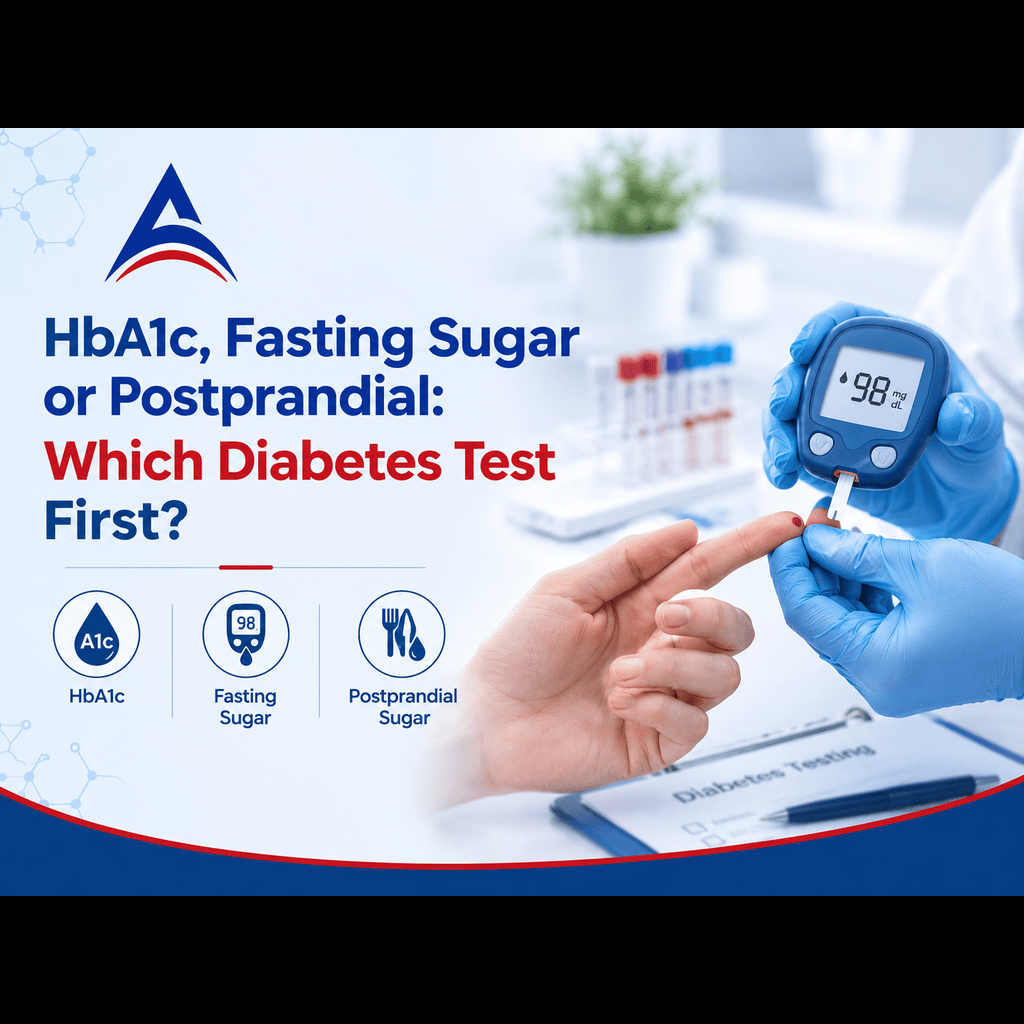
If your doctor has asked for a diabetes screening and you’re not sure where to start, book a HbA1c test in Indore first. It gives a clear three-month average of your blood sugar in a single sitting, and you don’t need to fast for it. Fasting sugar and postprandial tests still matter, but each one only captures a single moment in time. Here’s how the three compare, and which one actually answers the question you’re asking.
The Three Tests, in Plain Terms
These three tests get lumped together often, but they measure different things:
- HbA1c: your average blood sugar over the past 2 to 3 months, no fasting needed
- Fasting Blood Sugar (FBS): your glucose level after 8 to 10 hours without food, a single snapshot
- Postprandial (PP): your glucose level 2 hours after eating, shows how your body handles a meal
None of them is wrong to ask for. They just answer different questions, and your doctor usually wants more than one piece of the picture.
Which Test Should You Book First?
For a first-time screening, HbA1c is usually the most practical starting point. You can walk in any time of day, results reflect months of behaviour rather than one unlucky (or lucky) morning, and it isn’t thrown off by a stressful week or a poor night’s sleep the way a single fasting reading can be.
That said, fasting sugar still earns its place. A blood test in Indore covering both together gives your doctor two angles on the same problem, current level and long-term trend, rather than relying on one number alone.
Normal, Prediabetic and Diabetic Ranges
Use this as a general reference, your doctor will interpret your specific numbers against your full health picture, not this table alone.
| Test | Normal | Prediabetes | Diabetes |
| HbA1c | Below 5.7% | 5.7% to 6.4% | 6.5% or above |
| Fasting Blood Sugar | Below 100 mg/dL | 100 to 125 mg/dL | 126 mg/dL or above |
| Postprandial (2 hr) | Below 140 mg/dL | 140 to 199 mg/dL | 200 mg/dL or above |
A single high reading on any of these doesn’t confirm diabetes by itself. Doctors generally want a repeat test or a second test type before reaching a diagnosis.
When Fasting or Postprandial Tests Matter More
HbA1c isn’t always the right call on its own. A few situations where the other two carry more weight:
- Already diagnosed with diabetes: fasting and postprandial readings help track day-to-day control between HbA1c checks
- Adjusting medication or diet: postprandial testing shows whether a specific meal or dosage change is working
- Pregnancy: gestational diabetes screening relies on fasting and postprandial glucose, not HbA1c
- Certain blood conditions: anaemia or some haemoglobin variants can skew HbA1c results, so your doctor may lean on fasting sugar instead
What If My Fasting Sugar Is Normal But I’m Still Worried?
This comes up more than people expect. It’s possible to have a completely normal fasting reading while your sugar spikes well above range after meals, spikes a single fasting test will never catch. HbA1c doesn’t miss this the same way, since it reflects your average across the whole day, meals included, not just your first-thing-in-the-morning number.
If you have risk factors, family history, weight changes, unusual thirst or fatigue, and your fasting sugar keeps coming back normal, ask your doctor whether an HbA1c or postprandial test would round out the picture.
Booking Your Blood Test in Indore
Apoorva Diagnostic Centre runs HbA1c, fasting, and postprandial testing at both our Vijay Nagar and Sapna Sangeeta branches, with home collection available if getting to a lab isn’t convenient. If you’ve searched for a pathology lab near me Indore ahead of a diabetes screening, our pathology lab in Indore also covers the liver, kidney, and lipid panels doctors often order alongside a sugar test, so one visit usually covers the full picture your doctor asked for.
Frequently Asked Questions
1. Which test is better for diagnosing diabetes, HbA1c or fasting sugar?
Neither is strictly better, they’re complementary. HbA1c shows your average control over months, fasting sugar shows your current level. Doctors often use both together before confirming a diagnosis.
2. Do I need to fast before an HbA1c test?
No. Unlike fasting blood sugar, HbA1c can be tested at any time of day regardless of when you last ate.
3. How often should I get HbA1c checked?
Roughly every 3 to 6 months if you already have diabetes or are at high risk, and as advised by your doctor if you’re being screened for the first time.
4. Can I have normal fasting sugar but high HbA1c?
Yes. This usually happens when your sugar spikes after meals but returns to normal by the time you fast overnight, a pattern fasting sugar alone won’t catch.
5. What is a postprandial blood sugar test used for?
It measures your glucose 2 hours after eating and shows how well your body handles food, useful for monitoring diabetes management or adjusting medication and diet.
The Bottom Line
If you’re booking your first diabetes screening, start with HbA1c, it gives the clearest overall picture without fasting. Add a fasting or postprandial test if your doctor wants a same-day snapshot alongside it, especially if you’re monitoring an existing diagnosis or adjusting treatment. No single number tells the whole story, which is exactly why doctors usually ask for more than one.
Ready to get tested? Call 0731 495 2233 to book your HbA1c or blood sugar test at Apoorva Diagnostic Centre, or book online. If a sugar test isn’t the only thing on your checklist, our guide to health checkup tests every woman over 30 should get covers the other routine panels worth adding to the same visit.