
Noticing more hair on your pillow, hairbrush, or shower drain than usual can be worrying, and hair fall in women is more common than most people realise. While some hair shedding is completely normal, a sudden increase often points to an underlying health issue rather than just stress or styling habits.
Three of the most common medical causes are thyroid imbalance, PCOS, and low iron levels. This guide explains how each of these conditions affects your hair, and how simple blood tests can help you find the real cause.
What Counts as Normal vs Excessive Hair Fall in Women?
Losing 50 to 100 strands a day is considered normal, as this is simply part of your hair’s natural growth cycle. Hair fall in women becomes a concern when you notice visible thinning, widening partings, or clumps of hair coming out during washing or brushing.
If excessive shedding continues for more than two to three months, it’s worth looking into the underlying cause rather than just changing your shampoo or hair oil. Identifying the reason early makes treatment far more effective.
Thyroid Problems and Hair Fall in Women
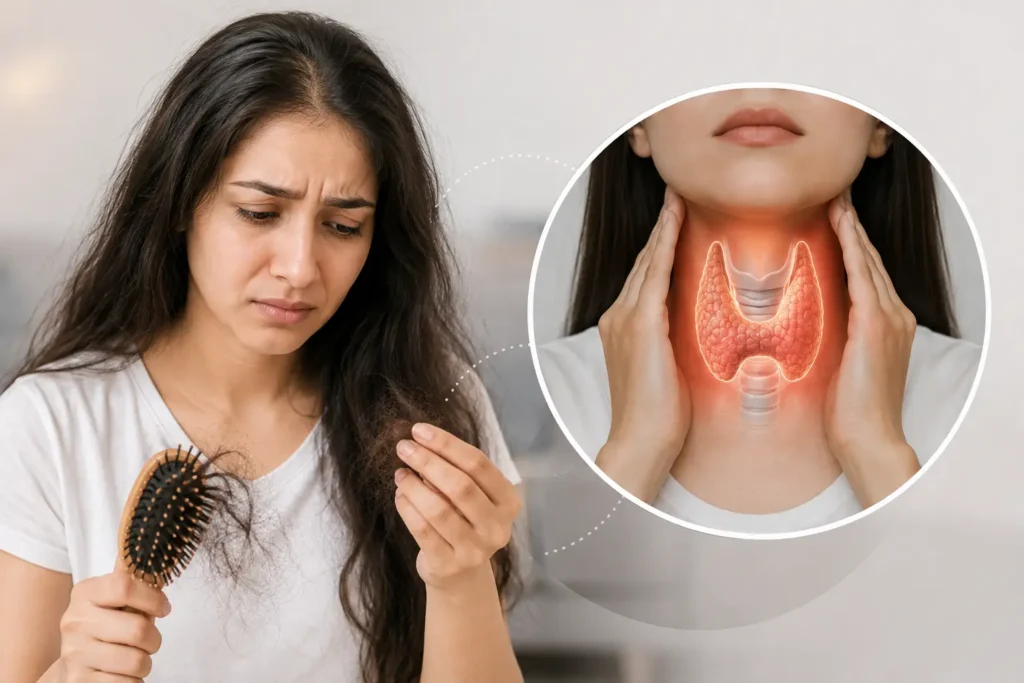
The thyroid gland controls your metabolism, and when it isn’t working properly, hair growth is often one of the first things affected. Both an underactive thyroid (hypothyroidism) and an overactive thyroid (hyperthyroidism) can cause noticeable hair thinning across the scalp.
With hypothyroidism, hair often becomes dry, brittle, and thin, sometimes along with fatigue, weight gain, and cold sensitivity. Hyperthyroidism, on the other hand, can cause hair to become fine and fall out more quickly, often paired with weight loss and a rapid heartbeat.
A simple thyroid profile test (T3, T4, TSH) can confirm whether a thyroid imbalance is contributing to your hair fall. If you’re looking for a reliable thyroid test in Indore, clinics actually stand behind, ask specifically for the TSH T3 T4 thyroid test Indore labs use to catch both an underactive and overactive thyroid in one panel.
Not sure if your thyroid is behind the hair fall? A same-day thyroid profile can tell you in one visit.
PCOS and Hair Fall in Women
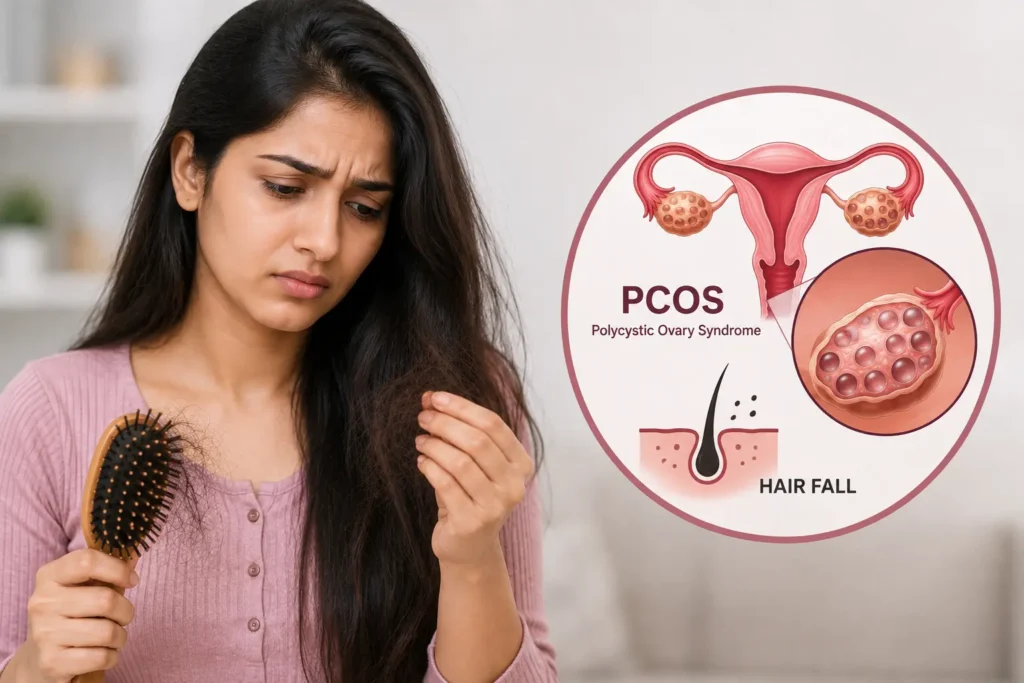
Polycystic Ovary Syndrome, or PCOS, is a hormonal condition that affects many women, and hair fall is one of its lesser-known symptoms. PCOS often raises androgen (male hormone) levels, which can shrink hair follicles and lead to thinning, particularly at the crown and hairline.
Other common signs of PCOS include irregular periods, acne, weight gain, and excess facial or body hair. If you notice hair thinning along with any of these symptoms, a pelvic ultrasound and a hormone test in Indore covering androgen levels can help confirm a PCOS diagnosis.
Iron Deficiency and Hair Fall in Women
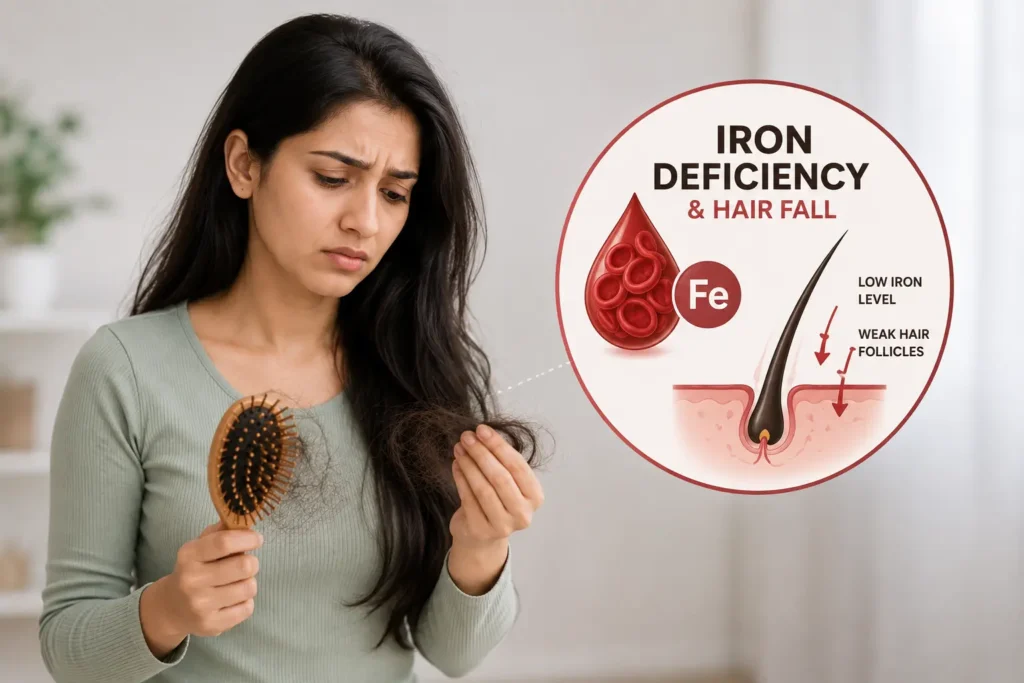
Low iron levels are one of the most overlooked causes of hair fall in women, especially those with heavy periods or a diet low in iron-rich foods. Iron is essential for carrying oxygen to hair follicles, and when levels drop too low, hair growth slows and shedding increases.
Common signs of iron deficiency include fatigue, pale skin, dizziness, and brittle nails alongside the hair fall. A ferritin blood test, which measures your body’s stored iron, is the most reliable way to check for this deficiency.
Fatigue and hair fall together? It might be your iron levels. A ferritin test takes minutes and gives you a real answer.
Comparing the Causes: Thyroid vs PCOS vs Low Iron
Since these three conditions can cause similar hair thinning, it helps to compare their other symptoms side by side. Use this table as a general guide, and confirm with proper testing.
| Condition | Other Common Symptoms | Key Test |
| Thyroid Imbalance | Fatigue, weight change, cold/heat sensitivity | Thyroid Profile (T3, T4, TSH) |
| PCOS | Irregular periods, acne, excess facial hair | Hormone panel, pelvic ultrasound |
| Iron Deficiency | Fatigue, pale skin, brittle nails | Ferritin, CBC |
Other Common Causes of Hair Fall in Women
While thyroid issues, PCOS, and low iron are among the most common medical reasons, they aren’t the only possible causes. Other factors can include:
- Vitamin D or B12 deficiency
- High stress levels or a recent illness
- Postpartum hormonal changes after childbirth
- Certain medications or crash dieting
- Excessive heat styling or chemical treatments
If your hair fall continues despite addressing lifestyle factors, it’s a strong sign that a medical cause may be involved. If you’re due for a broader check-up anyway, our guide to health checkup tests every woman over 30 should get covers what else is worth testing alongside this.
When Should You See a Doctor for Hair Fall?
Occasional shedding usually resolves on its own, but certain signs suggest it’s time to get checked. Consider booking an appointment if you notice:
- Hair fall lasting longer than three months
- Visible bald patches or a widening scalp part
- Hair fall paired with fatigue, weight changes, or irregular periods
- No improvement despite changing your hair care routine
Diagnostic Tests That Help Identify the Cause
Getting to the root cause of hair fall in women usually starts with a few simple blood tests, rather than guesswork. A complete workup often includes:
- CBC (Complete Blood Count): checks for anaemia and general blood health
- Ferritin Test: measures stored iron levels
- Thyroid Profile (T3, T4, TSH): screens for thyroid imbalance
- Hormone Panel: checks androgen and other hormone levels linked to PCOS
- Pelvic Ultrasound: helps confirm a PCOS diagnosis when needed
- Vitamin D and B12 Levels: rules out common nutritional deficiencies
The Key Takeaway
Hair fall in women is often linked to an underlying medical cause, with thyroid imbalance, PCOS, and iron deficiency being three of the most common culprits. The good news is that all three can usually be identified through simple, affordable blood tests, and treated effectively once diagnosed.
If your hair fall has lasted more than a few months or comes with other symptoms like fatigue or irregular periods, don’t wait, a proper diagnostic workup can point you toward the right treatment.
Frequently Asked Questions (FAQs)
1. Can thyroid problems cause hair fall in women?
Yes, both an underactive and overactive thyroid can cause noticeable hair thinning across the scalp. Hypothyroidism often causes dry, brittle hair, while hyperthyroidism can make hair fall out more quickly. A simple thyroid profile blood test can confirm whether this is the cause.
2. Does PCOS cause hair loss, and where does it usually occur?
Yes, PCOS can raise androgen hormone levels, which often leads to hair thinning around the crown and hairline. It’s frequently accompanied by irregular periods, acne, and excess facial or body hair. A hormone panel and pelvic ultrasound can help confirm a PCOS diagnosis.
3. What blood test checks for iron deficiency related to hair fall?
A ferritin test is the most reliable way to check stored iron levels linked to hair fall, often done alongside a CBC (Complete Blood Count). Low ferritin, even without full-blown anaemia, can still cause noticeable hair thinning. Correcting the deficiency through diet or supplements often improves hair growth within a few months.
Get Tested for Hair Fall in Indore
Dealing with unexplained hair fall and searching for a diagnostic lab near me in Indore you can trust? At Apoorva Diagnostic Centre, a trusted diagnostic centre in Indore, we offer complete thyroid, iron, and hormone testing to help identify the real cause behind your hair loss.
As a comprehensive pathology and radiology centre in Indore, and one of the most affordable diagnostic centres in Indore for families, we provide accurate reports and expert guidance every step of the way.
Call 0731 495 2233 to book your diagnostic tests today, or book an appointment online.