
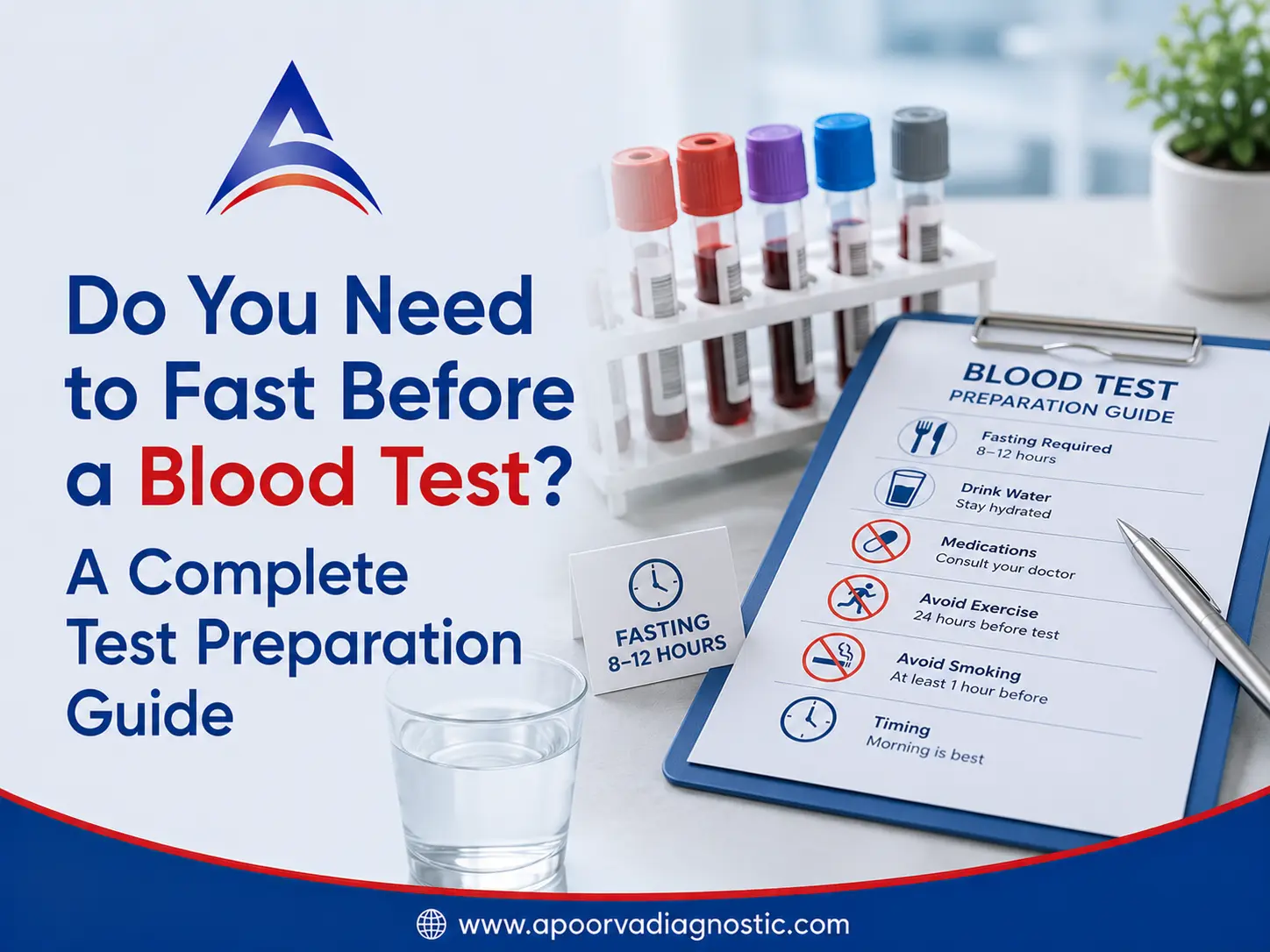
Blood tests are one of the most common and valuable tools used to assess overall health, diagnose medical conditions, and monitor ongoing treatment. However, many patients are unsure whether they should eat or drink before their appointment. If you’ve ever wondered, “Do You Need to Fast Before a Blood Test”, you’re not alone.
The answer depends on the type of blood test your healthcare provider has ordered. While some blood tests require fasting to provide reliable results, many others can be performed without any dietary restrictions.
Understanding how to prepare properly can help ensure your laboratory results are as reliable as possible and reduce the need for repeat testing. At Apoorva Diagnostic Centre, we provide professional laboratory services for blood tests in Indore, along with clear pre-test instructions to help patients prepare with confidence.
Do You Need to Fast Before a Blood Test?
Fasting means avoiding food and most beverages for a specific period before your blood sample is collected.
In most cases, fasting allows your body to return to a stable metabolic state so that certain blood measurements are not influenced by recent meals.
For many laboratory investigations, fasting is unnecessary. However, for others, it is essential for proper interpretation of results.
Always follow the instructions provided by your healthcare provider or laboratory before your appointment.
What Does “Fasting” Mean Before a Blood Test?
Fasting generally means:
- No food for 8–12 hours (or as instructed)
- Plain water is usually allowed
- Avoid tea, coffee, juice, soft drinks, and milk unless specifically advised otherwise
- Do not consume alcohol before the test
- Avoid chewing gum or consuming sugary candies during the fasting period
Water is often encouraged because it helps maintain hydration and can make blood collection easier.
Why Is Fasting Required for Some Blood Tests?
Food and beverages temporarily change the levels of various substances in your bloodstream.
For example, eating a meal can affect:
- Blood sugar
- Cholesterol
- Triglycerides
- Insulin
- Certain hormones
If these tests are performed immediately after eating, the results may not accurately reflect your body’s baseline levels.
Fasting helps standardize testing conditions and supports reliable interpretation.
Which Blood Tests Usually Require Fasting?
Not every blood test requires fasting.
Below are some common tests where fasting may be recommended.
Lipid Profile
A lipid profile measures:
- Total cholesterol
- LDL cholesterol
- HDL cholesterol
- Triglycerides
Some healthcare providers recommend fasting before this test, particularly when triglyceride measurement is important.
Fasting Blood Sugar (FBS)
This test measures blood glucose after a fasting period.
It helps evaluate:
- Diabetes
- Prediabetes
- Blood sugar regulation
Patients are typically advised to avoid eating before the sample is collected.
Glucose Tolerance Test (GTT)
This specialized test evaluates how the body processes glucose.
Patients usually fast before the test and then consume a measured glucose solution according to the testing protocol.
Certain Metabolic Tests
Some metabolic investigations may also require fasting depending on the specific parameters being measured.
Your healthcare provider will advise you if fasting is necessary.
Which Blood Tests Usually Do Not Require Fasting?
Many routine laboratory investigations can be performed without fasting.
Examples include:
- Complete Blood Count (CBC)
- Thyroid Function Tests (TSH, T3, T4)
- Vitamin D Test
- Vitamin B12 Test
- Liver Function Test (in many situations)
- Kidney Function Test (depending on clinical advice)
- Blood Group Testing
- Infection Screening
- Allergy Testing
Preparation requirements may vary, so always confirm with your laboratory before the appointment.
How Long Should You Fast Before a Blood Test?
The required fasting period depends on the test.
Common fasting durations include:
- 8 hours
- 10 hours
- 12 hours
Longer fasting than recommended is generally unnecessary and may even affect some laboratory values.
Follow the instructions provided for your specific investigation.
Can You Drink Water While Fasting?
Yes.
For most fasting blood tests, drinking plain water is encouraged.
Proper hydration may:
- Support circulation
- Make veins easier to locate
- Simplify blood collection
- Improve patient comfort
However, avoid flavored beverages, juices, tea, coffee, and soft drinks unless instructed otherwise.
Can You Take Your Regular Medications?
Medication instructions vary depending on the reason for testing.
Some medications may influence laboratory results, while others should never be stopped without medical advice.
Before your appointment:
- Inform your healthcare provider about all medications.
- Mention vitamins and supplements.
- Never discontinue prescription medicines without consulting your doctor.
What Happens If You Accidentally Eat Before a Fasting Test?
If you accidentally eat or drink something other than water before a fasting test, inform the laboratory staff before your blood sample is collected.
Depending on the test, your healthcare provider may:
- Proceed with testing
- Interpret the results accordingly
- Recommend rescheduling the test
Being honest about preparation helps ensure accurate interpretation.
Tips to Prepare for a Blood Test
Good preparation can improve your overall testing experience.
Here are a few helpful tips:
- Follow fasting instructions carefully.
- Drink adequate water unless advised otherwise.
- Get sufficient sleep the night before.
- Wear clothing with sleeves that can be rolled up easily.
- Carry previous laboratory reports if available.
- Inform the laboratory about medications or medical conditions.
- Arrive on time for your appointment.
These simple steps can help make the testing process smooth and efficient.
What Should You Do After a Fasting Blood Test?
Once your sample has been collected, you can usually resume your normal diet unless instructed otherwise.
Many people choose to bring a light snack to eat after the test.
Continuing to stay hydrated is also beneficial.
Does Fasting Affect Every Blood Test Result?
No.
Only certain laboratory investigations are significantly influenced by recent food intake.
Many blood tests evaluate components that remain stable regardless of meals.
This is why fasting instructions differ depending on the purpose of the investigation.
Why Following Preparation Instructions Matters
Proper preparation helps ensure that laboratory results accurately reflect your health.
Benefits include:
- Reliable test results
- Reduced need for repeat testing
- Better medical decision-making
- More meaningful comparison with previous reports
- Improved healthcare planning
Following the recommended preparation guidelines helps both patients and healthcare providers.
Common Myths About Fasting Before Blood Tests
Myth 1: Every Blood Test Requires Fasting
False.
Many routine laboratory investigations do not require fasting.
Myth 2: Drinking Water Breaks a Fast
False.
Plain water is generally allowed and often recommended.
Myth 3: Longer Fasting Gives Better Results
False.
Excessive fasting may alter certain laboratory values and is usually unnecessary.
Always follow the recommended fasting duration.
Why Choose Apoorva Diagnostic Centre for Blood Tests?
At Apoorva Diagnostic Centre, we are committed to providing reliable laboratory services supported by modern technology and experienced professionals.
Our advantages include:
- Advanced laboratory equipment
- Experienced pathology professionals
- Accurate reporting
- Convenient appointment scheduling
- Patient-friendly environment
- Trusted blood test in Indore
- Modern pathology and radiology centre Indore
- Recognized as the best diagnostic centre in Indore
We also provide clear pre-test guidance to help every patient prepare with confidence.
Frequently Asked Questions
1. Do all blood tests require fasting?
No. Many blood tests, including CBC and thyroid function tests, generally do not require fasting. However, tests such as fasting blood sugar and some lipid profile tests may require fasting.
2. Can I drink water before a fasting blood test?
Yes. Plain water is usually permitted and may make blood collection easier by keeping you hydrated. Avoid other beverages unless your healthcare provider gives different instructions.
3. What happens if I accidentally eat before a fasting blood test?
Inform the laboratory staff before your sample is collected. Depending on the test, the sample may still be collected, or your healthcare provider may recommend rescheduling for the most reliable results.
Book Your Blood Test at Apoorva Diagnostic Centre
Preparing correctly before your laboratory investigation can make a significant difference in the quality of your results. Knowing Do You Need to Fast Before a Blood Test helps ensure your healthcare provider receives the information needed to make informed clinical decisions.
At Apoorva Diagnostic Centre, we offer comprehensive laboratory services, advanced diagnostic facilities, and expert guidance for every blood test in Indore. Whether you need routine health screening or specialized investigations, our experienced team is committed to delivering reliable diagnostic support.
Contact Apoorva Diagnostic Centre today to schedule your blood test and experience trusted diagnostic care at a leading diagnostic centre in Indore.