
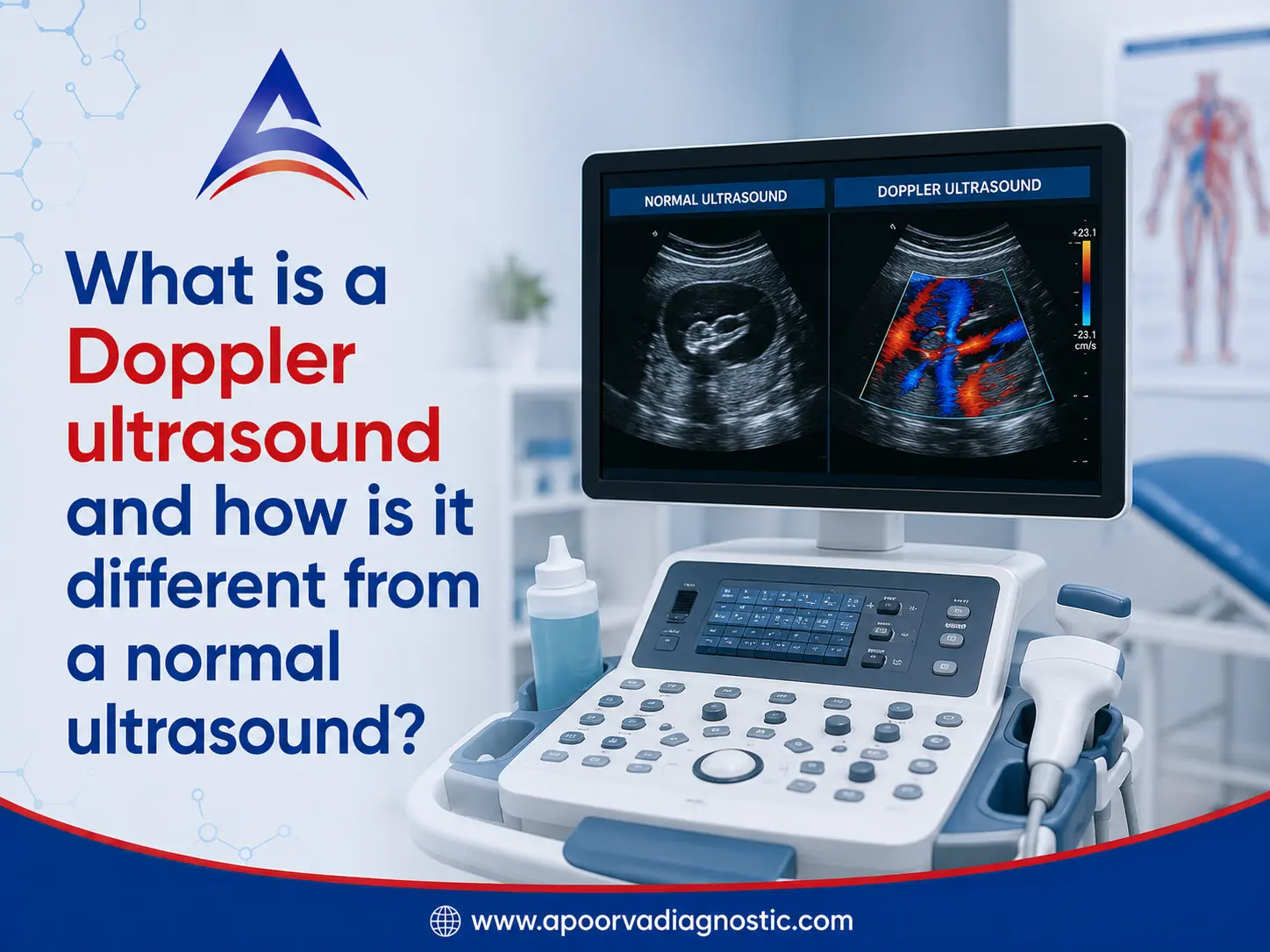
A Doppler ultrasound is a safe, painless scan that measures how blood moves through your arteries and veins. It uses sound waves to show the speed and direction of blood flow, something a normal ultrasound cannot do.
While a standard ultrasound creates still and moving pictures of your organs and tissues, a Doppler scan focuses on your circulation. In short, a normal scan shows structure, and a Doppler scan shows movement.
This guide explains what a Doppler ultrasound is, how it works, the main types, and when your doctor may recommend one, in simple language.
What Is a Doppler Ultrasound
A Doppler ultrasound, also called Doppler sonography, is a type of ultrasound scan that studies blood flow. It is named after physicist Christian Doppler, who described how the pitch of a sound changes as its source moves closer or further away.
During the test, sound waves bounce off moving red blood cells. The machine reads the change in these echoes and turns it into colours, graphs and a whooshing sound, so the radiologist can see how well your blood is moving. There are no needles, no dye and no radiation.

How Does a Doppler Ultrasound Test Work?
The process feels exactly like a normal ultrasound. A technician applies a small amount of gel on your skin and moves a handheld probe, called a transducer, over the area being examined.
The probe sends high-frequency sound waves into the body and picks up the returning echoes. Special software then converts those echoes into a live picture of your blood flow:
• Colour Doppler uses red and blue to show the direction of flow.
• Spectral (waveform) Doppler draws a graph of blood speed over time.
• Audible signal lets the doctor hear the rhythm of the flow.
Doppler vs Normal Ultrasound: Key Differences
Both scans use the same safe sound-wave technology, but they answer different questions. A normal ultrasound looks at the shape and texture of organs. A Doppler ultrasound looks at how blood travels through your vessels. The table below compares them at a glance.
| Feature | Normal Ultrasound | Doppler Ultrasound |
| Main purpose | Shows structure of organs and tissues | Shows speed and direction of blood flow |
| What you see | Still and moving grayscale images | Colour maps, graphs and sound of circulation |
| Best for | Pregnancy, abdomen, thyroid, cysts | Clots, blocked arteries, varicose veins |
| Output | Black-and-white picture | Colour + waveform (spectral trace) |
| Radiation | None | None |
| Comfort | Painless | Painless |
Types of Doppler Ultrasound Scans
Radiologists choose the type of Doppler based on the body part and the problem being investigated. The most common types include:
• Colour Doppler: adds colour to a normal image to map the direction of blood flow.
• Power Doppler: more sensitive to slow flow, useful for small vessels and organs.
• Spectral / Pulsed-Wave Doppler: measures exact blood speed as a waveform graph.
• Duplex Doppler: combines a normal image with a Doppler reading at the same time.
When Do Doctors Recommend a Doppler Ultrasound?
A doctor may order a Doppler ultrasound test when there are signs of poor circulation or a blockage. Common reasons include:
• Suspected deep vein thrombosis (a blood clot in the leg)
• Varicose veins or persistent leg swelling and pain
• Narrowed or blocked arteries, including carotid artery checks
• Monitoring blood flow to a baby during pregnancy
• Checking circulation in the kidneys, liver or testicles
• Following up after surgery, a bypass or a transplant
Because it is non-invasive and radiation-free, a Doppler scan is often the first test used to study blood vessels before any advanced imaging is considered.
How to Prepare and Is It Safe?
Preparation is minimal. For most scans you can eat and drink normally, but an abdominal Doppler may need a few hours of fasting, and an arterial study of the legs may ask you to avoid smoking beforehand. Wear loose, comfortable clothing for easy access to the area.
The test is completely painless and usually takes 30 to 45 minutes. A Doppler ultrasound uses no ionising radiation, which is why leading health bodies consider it very safe, even during pregnancy when performed by trained professionals.
The Key Takeaway
A normal ultrasound shows the structure of your organs, while a Doppler ultrasound shows how your blood is flowing. Both are safe, painless and radiation-free, and doctors often use them together. If you have symptoms linked to circulation, a Doppler scan gives your physician a clear, real-time view of your blood vessels.
Frequently Asked Questions (FAQs)
1. What is the difference between a Doppler ultrasound and a regular ultrasound?
A regular ultrasound creates images of the shape and texture of your organs and tissues. A Doppler ultrasound goes a step further and measures the speed and direction of blood flow through your arteries and veins. In simple terms, a normal scan shows structure and a Doppler scan shows movement.
2. Do you need to fast before a Doppler ultrasound?
It depends on the area being scanned. Most Doppler tests of the legs, neck or arms need no fasting at all. For an abdominal Doppler study, your centre may ask you to fast for a few hours so the blood vessels are easier to see. Always follow the specific instructions given at the time of booking.
3. What can a Doppler ultrasound detect?
A Doppler ultrasound can detect blood clots, narrowed or blocked arteries, poor circulation, varicose veins, and reduced blood flow to organs such as the kidneys or to a baby during pregnancy. It helps doctors find and monitor circulation problems early, without any needles or radiation.
Book Your Doppler Ultrasound in Indore
Need a Doppler ultrasound or colour Doppler test in Indore? At Apoorva Diagnostic Centre, our senior MD radiologists use advanced machines to deliver accurate, same-day reports, with home sample collection and female staff for female patients. With 35+ years of trusted experience and two convenient locations, your health is in expert hands.
Call 0731 495 2233 to book your scan today, or book an appointment online.